By michelle_mitchell Kasım 23, 2026
Levels decline naturally with age, and research suggests it may influence collagen production, extracellular matrix remodeling, wound healing, antioxidant defense, and gene expression. That’s more human data than exists for almost anything else in this stack, though the full Phase II results were never published as a standalone peer-reviewed paper, so it’s still fair to treat it as encouraging rather than definitive.
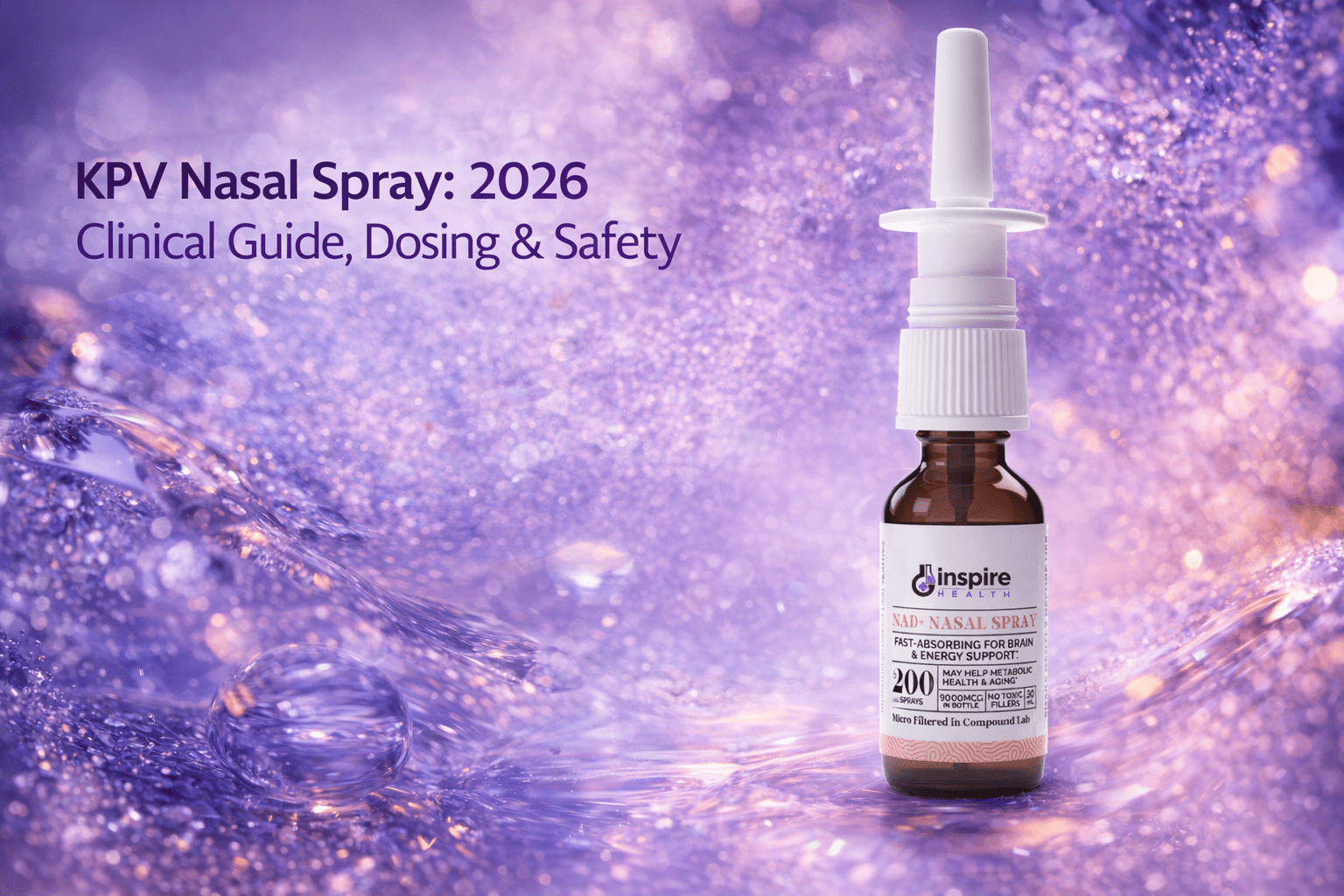
That’s a big part of why it’s generated so much interest around gut health specifically. Preclinical research suggests KPV can influence inflammatory signaling pathways, including NF-κB, and it’s been tested in two standard animal models of ulcerative colitis, where it has reduced inflammatory markers and accelerated healing of the intestinal lining. If you’ve spent any time in the peptide world lately, you’ve probably heard about the KLOW peptide stack. As interest in multi-peptide formulations continues to grow, clarity around their intended use and biological focus becomes increasingly important.
In upcoming times, adhering to the dosage guidelines found on the packaging is crucial, and it is essential to refrain from surpassing the advised quantity. Scientific investigations into pathways related to cellular repair, tissue regeneration, and the modulation of inflammation can greatly benefit from the peptide formulations offered by both GLOW and KLOW. By incorporating modulation of the inflammatory cascade and interactions with the immune system, the KLOW formulation broadens its research applications, making it appropriate for intricate multi-system studies. Primarily, the GLOW formulation is studied in controlled laboratory settings for its impact on pathways involved in tissue regeneration and the synthesis of structural proteins. Although these formulations have similar names, their theoretical mechanisms and molecular structures differ significantly.
An unapproved substance sold without a prescription, the $80 vial is intended for research purposes only and is not meant for human consumption. People often mentally compare GLOW, priced at approximately $80 from a research site, with KLOW, which costs $349 from a clinic. Dosage charts provided by vendors for GLOW and Wolverine are designed for individuals preparing their own vials, resulting in a format that resembles arithmetic homework.
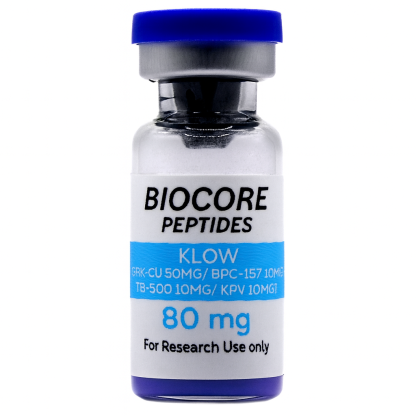
Individual results may vary significantly based on health status, injury type, and other factors. While early human data is encouraging, comprehensive clinical trial data remains limited for most peptide compounds. The information provided on this website, including all articles, guides, and educational content, is for informational and educational purposes only and is not intended as medical advice, diagnosis, or treatment. KLOW combines BPC-157, GHK-Cu, KPV, and TB-500 in one vial, which means its side-effect profile is really four profiles plus the honest admission that nobody has studied the combination.
Are peptide stacks safe?
Bacteriostatic water is sold separately, so add it to your cart when you buy KLOW blend. Store reconstituted vials at 2–8°C and use within 28 days. Add 2.5mL of bacteriostatic water to the 80mg vial by injecting slowly along the vial wall — never directly onto the powder.
KPV, a tripeptide fragment of alpha-MSH, directly suppresses NF-kB — the upstream switch for TNF-alpha, IL-6, and IL-1beta production — and carries documented gut-specific anti-inflammatory activity (Luger & Brzoska, 2007). GHK-Cu, the copper-binding tripeptide, is the blend’s namesake heavyweight at 50mg — its research base covers collagen synthesis, wound healing, and broad gene-expression effects, largely from topical and dermal studies (Pickart & Margolina, 2018). This article reports what has been documented, not what should be done.
The KPV component is what people most commonly point to when they choose KLOW over GLOW. An evidence-based KLOW protocol guide covering dosing structure, reconstitution math, injection schedule, cycle length, and safety considerations for this 4-peptide stack. This article is provided for educational research purposes only and should not be treated as medical advice. The other three compounds have weaker human records, with BPC-157 having only three small human pilot studies and KPV having only rodent-model data. KLOW is not approved by the FDA as a combination, and none of the four individual compounds is currently FDA-approved for human use either.
Four compounds also means four sets of side effects and no way to tell which one did what, so anyone who has not run the components separately first is guessing. A gut problem on its own is BPC-157 and KPV, which skips the copper peptide and the TB-500 and costs a fraction as much. For gut protocols the question mostly goes away, since KPV and BPC-157 are taken as capsules; see oral vs injectable BPC-157. KPV has no known conflict with BPC-157 or TB-500 and the three are sometimes drawn together, though no stability data exists for any peptide mixture sold on the research market. A 2 to 4 week break follows, and the only way to know whether KPV was doing anything is to leave it out of the next run and see whether symptoms return. KPV is carried into inflamed intestinal cells by the PepT1 transporter, which is upregulated during inflammation, and oral KPV reduced colitis in several mouse models.

The full KLOW stack concept
Many people in the Fully Optimized Health community stack KLOW alongside other BPC-157 protocols for gut healing, or add it to existing TB-500 regimens for injury recovery; both with excellent results. But if chronic inflammation is in the picture at all (and for most people over 40 it is), KLOW is the more complete protocol. If your primary goal is purely injury recovery and/or aesthetic skin rejuvenation without a significant inflammatory component, GLOW may be the appropriate starting point. And unlike most anti-inflammatory compounds, KPV works INSIDE the cell. This is why I’ve seen KLOW produce results in people who had already run GLOW protocols without breaking through their plateau… the missing piece in the GLOW trifecta was always the immune modulation layer. Long-time followers of the Jay Campbell ecosystem already know about the GLOW peptide blend.
Analyzing the four components.
Letting gravity do the work is the documented approach. BAC water gives you up to 28 days refrigerated, which matters when one Klow vial provides 20+ injections. Other sources make it clearer that these are research compounds or experimental materials rather than approved consumer products. Search interest around Klow Peptide Stack appears to reflect broader attention to branded peptide stacks and combined formulations in 2026. It does not present the term as a clinical protocol, treatment category, or approved formulation.
Some animal model studies have examined tissue-level effects following experimental injury, with researchers noting changes in inflammatory marker expression in TB-500-treated compared to control groups. Several published investigations have examined behavioral readouts in lesion models where dopaminergic pathways were experimentally disrupted, with BPC-157 appearing to influence certain behavioral parameters in these controlled experimental systems. Researchers choosing between the two formulations should consider their specific pathway targets and experimental designs. KLOW is a multi-peptide research formulation typically containing GHK-Cu, BPC-157, TB-500, and KPV. This guide provides a thorough examination of the KLOW peptide stack’s known components, the receptor biology underpinning each, and what published preclinical literature has explored in relevant model systems. Source Peptides supplies research compounds exclusively to qualified researchers, research institutions, and laboratories for in-vitro laboratory research only.